
Horror games are often grouped together as if they all aim to do the same thing. In reality ,psychological horror and survival horror approach fear from very different angles.
One attacks the player’s mind, the other tests their ability to endure danger.
Understanding the difference helps players choose the experience they actually want ,and explains why some horror games linger long after the screen goes dark ,while others deliver immediate, adrenaline-driven tension.
What Is Psychological Horror?
Psychological horror focuses on mental unease rather than physical threat. Fear is built through atmosphere, implication, symbolism ,and the distortion of reality. Combat is minimal or nonexistent ,and players are often made to question what they’re seeing, hearing, or even thinking.
Instead of asking “Can I survive this?” ,psychological horror asks:
- Can I trust my perception?
- Why does this feel wrong?
- What is this experience saying about the character ,or me?
The goal is long-lasting discomfort rather than momentary shock.
Psychological Horror Key Examples
1.Silent Hill 2
A benchmark for the genre. Fear comes from guilt, repression, and symbolism rather than direct threats. Every enemy and location reflects psychological trauma.
- Visage
Domestic spaces become hostile. Familiar environments are slowly stripped of safety, creating fear through anticipation and mental exhaustion.
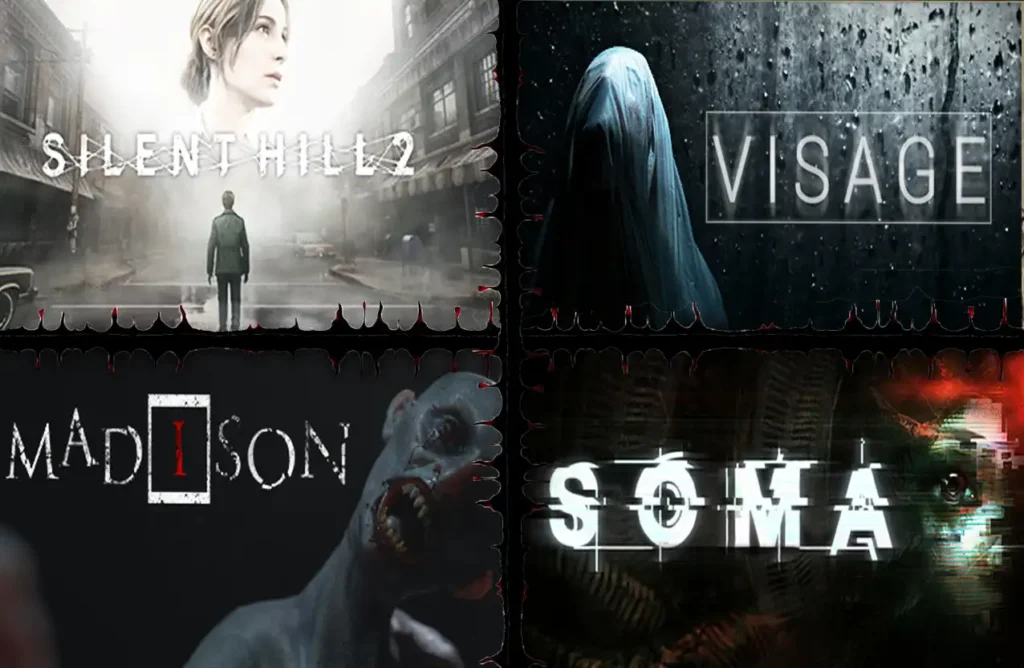
- MADiSON
Relentless psychological pressure with disturbing imagery and sound design. The game offers little relief, forcing constant unease.
- SOMA
Existential horror at its peak. The fear isn’t monsters ,it’s the ideas about identity, consciousness, and existence that the game confronts you with.
What Is Survival Horror?
Survival horror is built around scarcity and vulnerability. Players must manage limited resources ,ammo, health, stamina ,while facing physical threats. Combat is possible, but often risky, making every encounter a calculation.
Instead of psychological ambiguity, survival horror creates tension through:
- Limited supplies
- Dangerous enemies
- Constrained environments
- Constant pressure to stay alive.
The fear is immediate and mechanical, rooted in survival systems.
Survival Horror Key Examples
- Resident Evil 4 Remake
Combat-focused survival horror with resource management at its core ,Every encounter demands efficiency and awareness.
- Dead Space Remake
Strategic dismemberment and relentless enemy pressure create constant tension. Survival depends on precision and awareness.
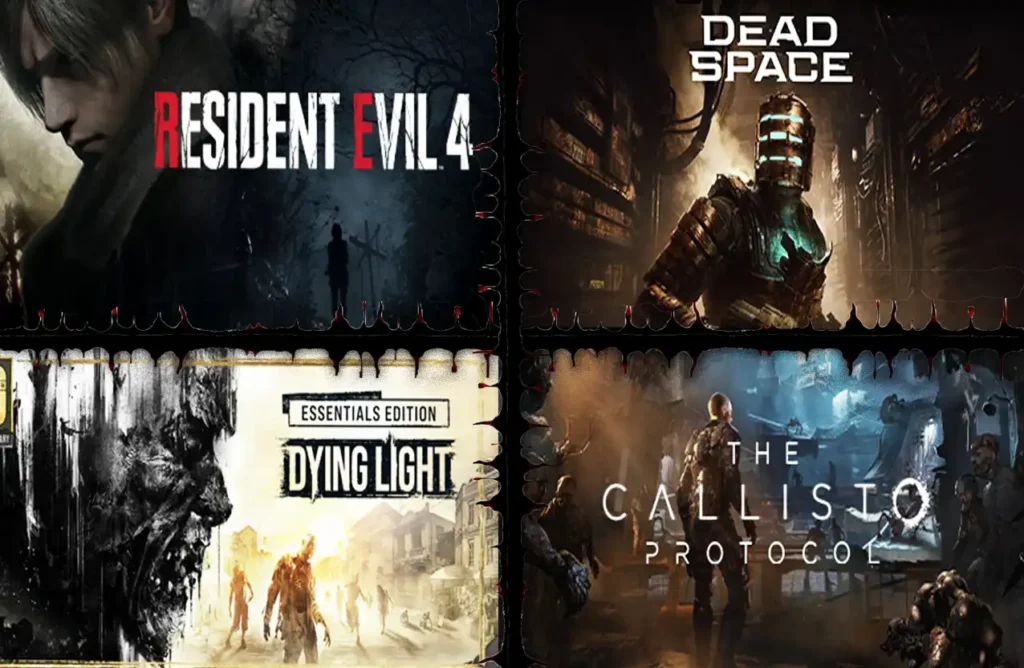
- Dying Light
Survival systems dominate the experience, especially at night. Movement, stamina ,and environmental danger are key to staying alive.
- The Callisto Protocol
A cinematic take on survival horror, emphasizing physical vulnerability ,and close quarters tension.
Core Differences at a Glance
| Aspect | Psychological Horror | Survival Horror |
|---|---|---|
| Primary Fear | Mental unease, paranoia | Physical threat, danger |
| Combat | Minimal or absent | Central mechanic |
| Pacing | Slow, deliberate | Tense, reactive |
| Player Focus | Interpretation, endurance | Resource management |
| Fear Style | Lingering, emotional | Immediate, adrenaline-driven |
Which One Is Scarier?
This depends entirely on the player.
Psychological horror tends to linger longer. The fear doesn’t end when the game does ,it stays in your thoughts. It’s unsettling because it feels personal and ambiguous.
Survival horror delivers consistent tension. The fear comes from knowing you’re always one mistake away from death. It’s stressful, engaging, and often more accessible.
Neither is objectively scarier ,they simply target different parts of the player’s mind.
Hybrid Games: Where Things Blur
Some games intentionally blur the line between psychological and survival horror. They use survival mechanics while also exploring mental themes. However ,a hybrid usually leans more heavily toward one side.
For example:
- A game with heavy combat and resource management is still survival horror ,even if it has psychological themes.
- A game with minimal combat but deep symbolism remains psychological horror, even if survival elements exist.
Understanding the dominant design goal helps classify the experience correctly.
Which Genre Is Right for You?
Choose psychological horror if you:
- Prefer atmosphere over action
- Enjoy symbolism and interpretation
- Want fear that lingers emotionally
- Don’t need combat to feel tension.
Choose survival horror if you:
- Enjoy managing resources under pressure
- Want constant mechanical tension
- Prefer clear threats and objectives
- Like feeling tested rather than disturbed
Many players enjoy both ,just at different times.
Final Thoughts
Psychological horror and survival horror aren’t rivals ,they’re two philosophies of fear. One unsettles the mind, the other challenges endurance. Both are effective when designed with intention.
Understanding the difference doesn’t just help you pick the right game ,it helps you appreciate why certain horror experiences affect you the way they do.
Whether you prefer the slow burn of psychological dread or the relentless tension of survival, the horror genre offers a space for both to thrive.
related steam pages:
- SILENT HILL 2 Steam page.
- Visage Steam page.
- MADiSON Steam page.
- SOMA Steam page.
- Resident Evil 4 Steam page.
- Dead Space Steam page.
- Dying Light Steam page.
- The Callisto Protocol™ Steam page.
You Can Check our Steam Horror Games Collection here:
You Can also check the Best Indie Psychological Horror Games You Shouldn’t Miss
You can also check the Best Psychological Horror Games Ultimate Guide.